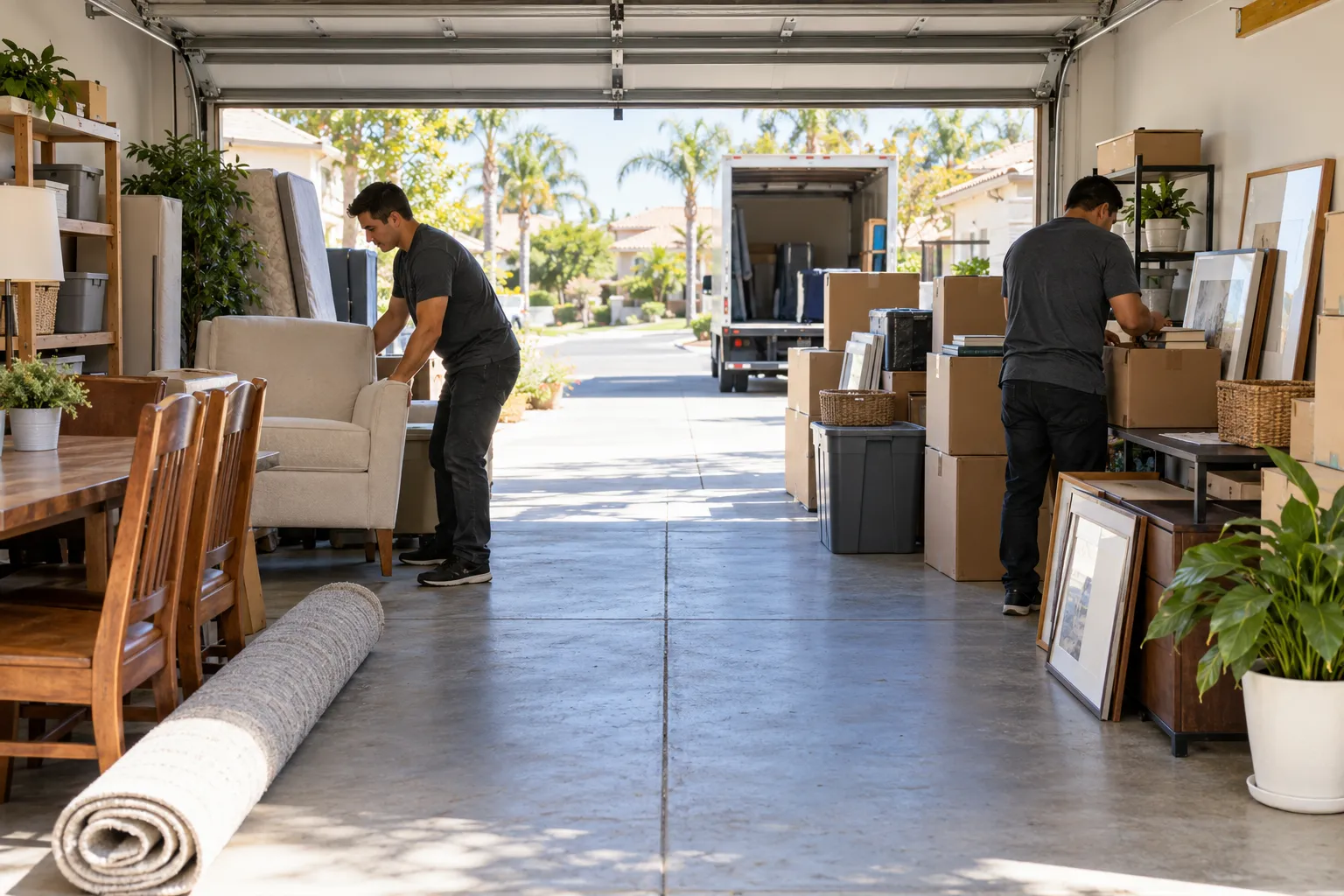
Protect the keep zone first
Choose a closed room, locked vehicle, or clearly separated wall that the removal team will not enter. Put identification, financial records, medication, chargers, keys, heirlooms, and moving-day supplies there before sorting anything else.
Work one room at a time
Finish a room before starting the next. Half-sorted rooms create duplicate decisions and make it harder to estimate volume. Use color tape or large signs that can be read from the doorway.
Separate special-handling items
Paint, chemicals, fuels, batteries, and similar household hazardous waste do not belong in ordinary trash or a general removal pile. CalRecycle says hazardous waste cannot be placed in garbage, storm drains, or on the ground. Use the local approved collection channel.
Use municipal pickup strategically
Menifee’s waste agreement provides limited scheduled bulky-item collections for eligible residential customers. That may suit a few curb-ready items, while an interior multi-room cleanout is a different job. Confirm current account rules and pickup limits directly.
Finish with a visual inventory
Photograph each removal group and the route from room to exit. Include garage shelves, patio items, and detached areas. A complete photo set helps the estimate reflect the real job.
Quick worksheet
| Group | Examples | Next step |
|---|---|---|
| Keep | Documents, keys, medication, packed essentials | Move to protected zone |
| Remove | Approved furniture and ordinary household items | Photograph and include in estimate |
| Special handling | Paint, chemicals, fuel, batteries | Use an approved local program |
| Uncertain | Family items, fixtures, leased equipment | Resolve before appointment |
Sources
- CalRecycle household hazardous waste (accessed 2026-10-22)
- Menifee waste agreement (accessed 2026-10-22)
Need help with the removal itself?
Review the house cleanout scope, then email the items, access route, city, and timing.
House CleanoutEstimate checklist → Email for an estimate