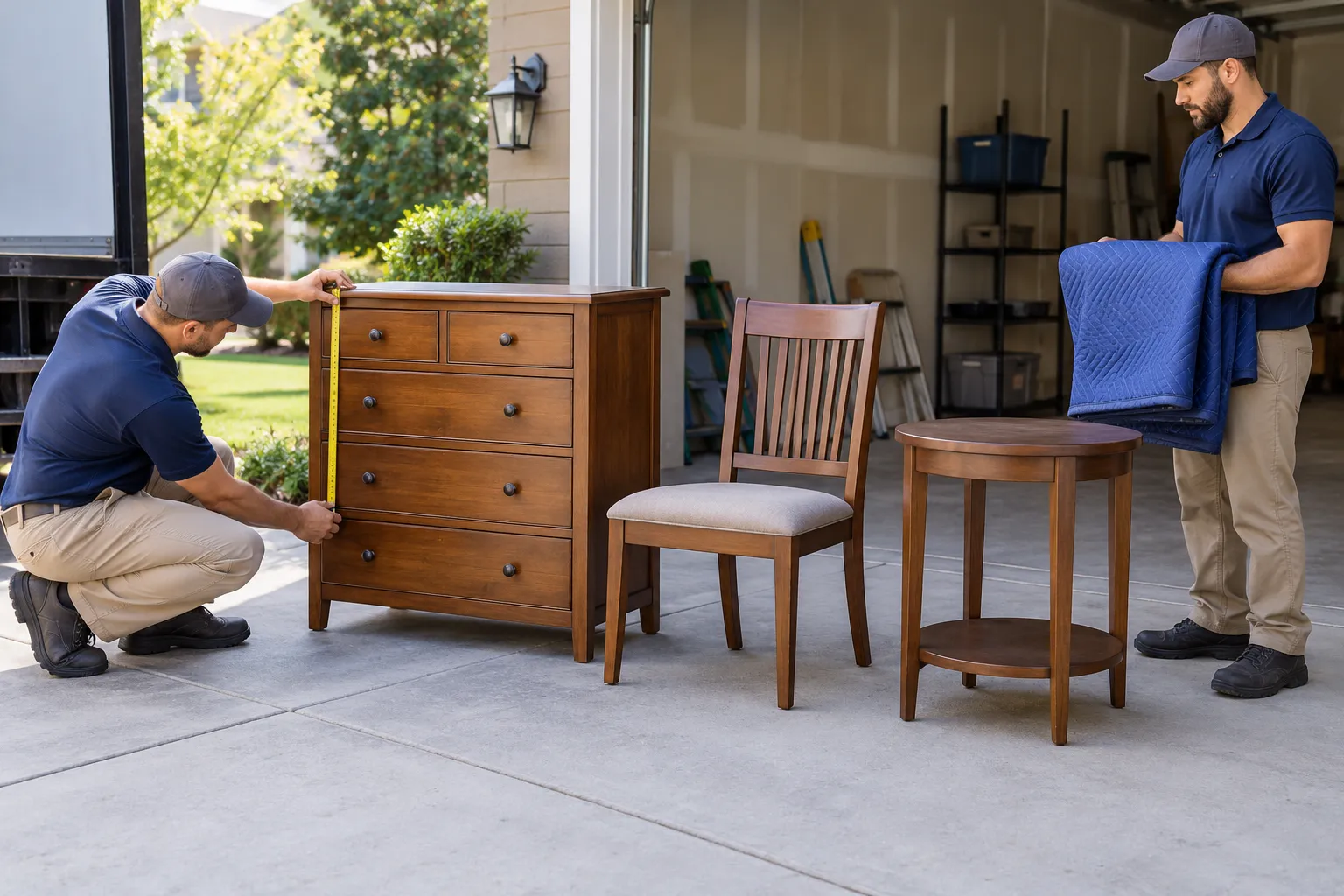
Empty and inspect the furniture
Remove drawer contents, cabinet items, bedding, cushions, and loose shelves. Photograph existing damage and any glass, stone, reclining, or powered parts that affect handling.
Measure the whole route
Record the furniture dimensions and the narrowest doorway, hallway turn, stair landing, elevator opening, and loading entrance. Include the distance from the exterior door to legal parking.
Handle loose parts carefully
Bag labeled hardware only when you know a part is intended to be removed. Do not force glued, powered, or structural components. Tell the provider which tools or manufacturer instructions are available.
Protect the path
Remove rugs, lamps, plants, frames, pet gates, boxes, and other trip or snag hazards. OSHA material-handling guidance stresses that load size, route condition, and equipment affect the risk of strains and impacts.
Confirm building and parking access
Reserve the elevator if required, arrange gate access, and learn the building’s vendor hours. Do not block fire lanes, accessible spaces, or traffic while staging furniture.
Quick worksheet
| Check | What to share |
|---|---|
| Piece | Type, size, material, condition |
| Loose parts | Cushions, shelves, drawers, glass, hardware |
| Route | Doors, turns, stairs, elevator, distance |
| Property | Gate, building hours, floor protection |
| Loading | Legal parking point and carry distance |
Sources
- OSHA material-handling guidance (accessed 2026-10-22)
Need help with the removal itself?
Review the furniture removal scope, then email the items, access route, city, and timing.
Furniture RemovalEstimate checklist → Email for an estimate