Start with the item, not the room
Record width, height, and depth for each bulky piece. Remove cushions and loose shelves before measuring, but do not assume legs or frames can be taken apart. Photograph connection points so the provider can assess likely disassembly.
Measure the route in order
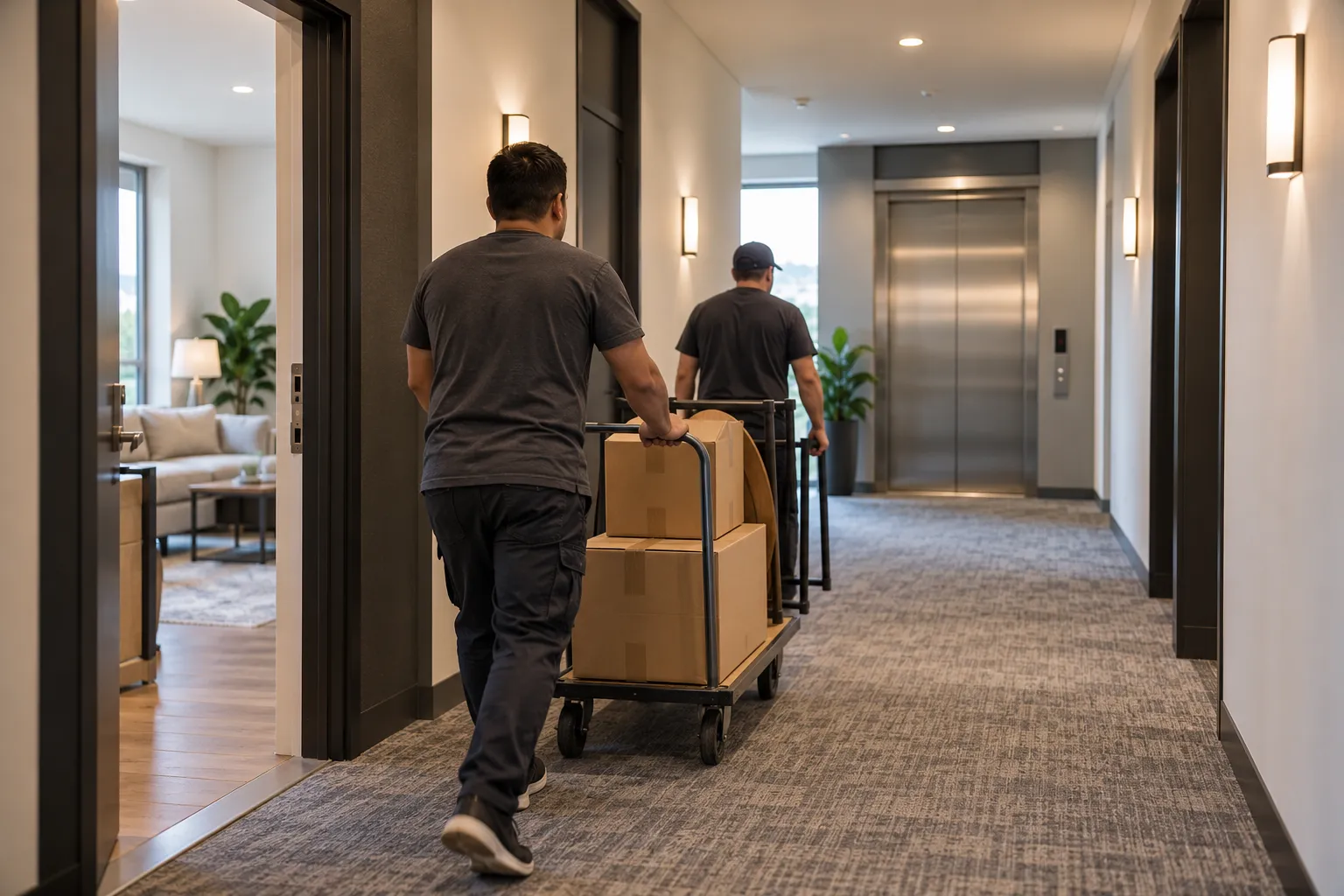
Walk from the item to the vehicle. Check the unit doorway, hallway turns, elevator opening and interior, stair width and landings, lobby doors, and the final loading entrance. Write down the smallest usable dimension, not the widest point you happen to see.
Account for turning space
A piece can be narrower than a doorway and still fail at the turn immediately after it. Photograph corners and landings from both directions. Mention railings, light fixtures, door closers, and low ceilings that reduce usable space.
Confirm building rules
Ask management about elevator reservations, vendor hours, loading locations, floor protection, gate entry, and certificates or documents they require. These are property rules, not citywide rules.
Keep the route clear
OSHA notes that rough routes, stairs, and poorly maintained carts increase handling strain. Clear shoes, rugs, plants, boxes, and wall decor from the path. Leave furniture lifting to people with the equipment and staffing for the job.
Quick worksheet
| Measure | Record |
|---|---|
| Furniture | Width × height × depth; removable parts |
| Doorways | Clear width and height with door open |
| Turns | Hall width plus corner clearance |
| Elevator | Door opening, cab size, reservation window |
| Loading | Distance, stairs, gate, parking instructions |
Sources
- OSHA material-handling guidance (accessed 2026-10-22)
Need help with the removal itself?
Review the apartment cleanout scope, then email the items, access route, city, and timing.
Apartment CleanoutEstimate checklist → Email for an estimate