Start with possession and authority
Identify who has legal possession, who can authorize entry, and who can approve removal. If the facts are disputed, stop and get legal guidance before anyone moves the belongings.
Use the correct notice process
California Courts describes a Notice of Belief of Abandonment for certain situations where rent is at least 14 days late and the landlord reasonably believes the tenant moved out. The page lists response periods and warns that a wrong decision can lead to a wrongful-eviction claim. That is one process, not a universal shortcut.
Document what remains
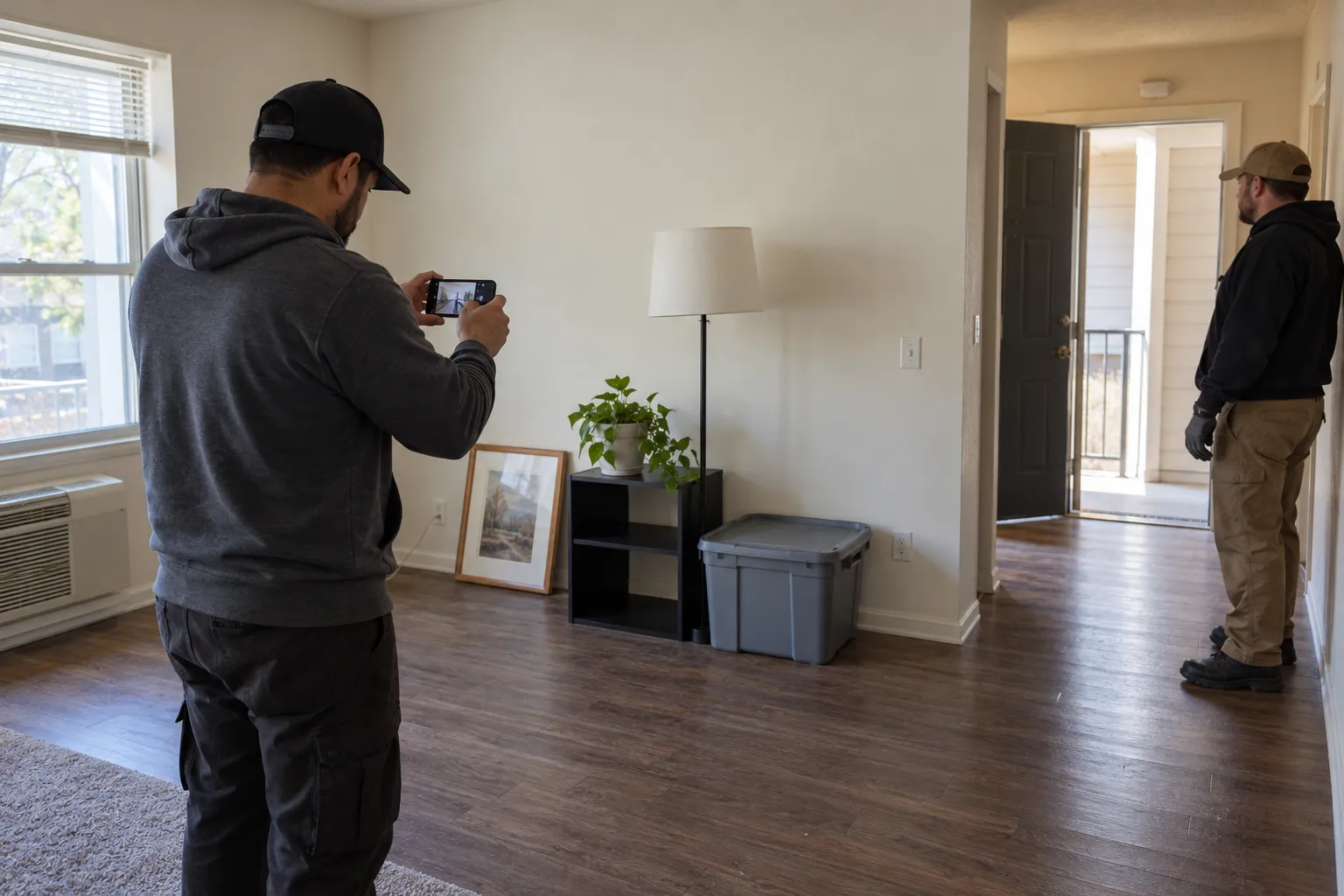
Take dated photos from each doorway and closer views of valuable-looking, personal, or uncertain items. Create a simple room-by-room inventory. Preserve messages, notices, keys, and access records with the property file.
Separate property from debris
Do not let a visual judgment replace the authorized inventory. A closed box, drawer, or bag can contain documents or personal property. Mark fixtures, appliances, maintenance supplies, and owner property that must remain.
Write the removal scope
Give the provider a room list and clear authorization. Name exclusions, locked spaces, fixtures, and items awaiting another decision. Keep the authorized contact reachable during the job.
Quick worksheet
| Before booking | Evidence to retain |
|---|---|
| Authority | Lease/possession record and authorized contact |
| Notice | Applicable notice and delivery record |
| Inventory | Dated room photos and item notes |
| Access | Keys, lockbox record, gate instructions |
| Scope | Written keep/remove/exclusion list |
Sources
- California Courts landlord notice guide (accessed 2026-10-22)
Need help with the removal itself?
Review the tenant move-out cleanout scope, then email the items, access route, city, and timing.
Tenant Move-Out CleanoutEstimate checklist → Email for an estimate